“Blood: It’s in You to Give!”

Okay, this not strictly about Boomers, but just think: this could be your daughter or your sister or your friend! An urgent plea on from my millennial daughter who cares deeply about her friend:

Dear friends,

A few of you may have heard me talk about a friend of mine who was recently diagnosed with Idiopathic Pulmonary Fibrosis (IPF). In a nutshell, this terminal disease (for which there is no cure) causes scar tissue to grow inside my friend’s lungs, making it difficult for her to breathe. It also makes it difficult for oxygen to move through tiny air sacs into her bloodstream, which her other organs desperately need.

She currently has 38% lung capacity and travels everywhere with an oxygen tank she calls Thomas (the Tank).

She’s TWENTY-NINE years old.

To say her world has become a lot smaller and her life a lot more challenging is a huge understatement.

Currently, my friend is in desperate need of packed red blood cells as her hemoglobin levels are rapidly declining because of her IPF. Hemoglobin is the protein molecule in red blood cells that carries oxygen from the lungs to the body’s tissues and returns carbon dioxide from the tissues back to the lungs – and YES, I had to Google that. #EnglishMajor

Unfortunately, my friend is not able to access blood because the supply is critically low and – unsurprisingly – literally thousands of other Canadians need blood every day. As an example, another friend of mine gave birth to her third child in February, but the delivery was extremely complicated and she nearly died. Blood platelets and blood products from more than 45 (!!!!!!!!!) donors are the reason she is alive today. 

With the long weekend approaching, I don’t doubt that the number of people who need blood will increase due to car accidents and other tragic events that always seem to cluster around holidays.  Canadian Blood Services is projecting a need for 60,000 blood donors by July 1 to meet the demand.

If you are in good health and able to give blood this week, next week, or really any time, I encourage you to do it! You never know whose life you could be saving.


Personally, I’ve taken it for granted that “other people” donate blood and that my friends and family will be magically exempt from this need. I’m embarrassed to admit that it’s taken 10 years (since donating in high school) and a friend’s illness to fully realise that I can play a role in saving other people’s lives.

If you read all the way to the end of this email, thank you. If you donate blood already, thank you. If you decide to donate because of this message, thank you. Even if you decide not to or can’t donate, for whatever reason, I’m sending you this email because I think you’re awesome, and I’m thankful to know you.

You can find out more information about donating blood at www.blood.ca Please also encourage your friends and family to donate.

Blood: it’s in YOU to GIVE!

Thank you!!

Ally


Under the Big Top: Thoughts on National Aboriginal Day

nad1170px_1432040617140_eng

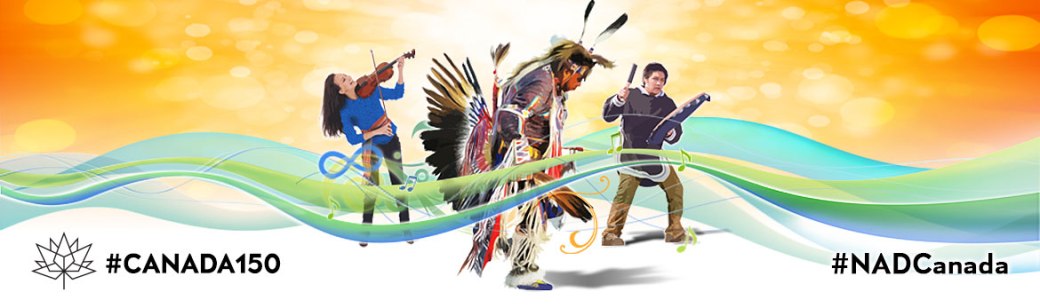
Wednesday, June 21 is National Aboriginal Day, a special day dedicated to celebrating the heritage, diverse cultures and outstanding achievements of First Nations, Inuit and Métis. With that in mind, I wanted to share with you the following blog post from Maggie McLeod, Executive Minister, Aboriginal Ministries and Indigenous Justice for the United Church of Canada. Maggie’s blog post talks about the beauty and vulnerability inherent in coming together as a diverse faith community, and how sharing our gifts allows us to grow closer to the Creator and to one another.

The first part of Maggie’s piece is copied below, and I encourage you to read her post in full on the United Church of Canada’s blog.

I took these pictures last August while visiting my mother’s relatives in the central part of Saskatchewan on the Muskoday First Nation. They capture some of the 825 dancers that participated in the 25th annual traditional Powwow.

I was sitting beside my aunt, my mother’s youngest sister, during the afternoon Grand Entry when she remarked, “There is no such thing as too much colour when you are Indigenous.” I have cherished my aunt’s words, since. They have provoked me to look more deeply into the richness of what I see and experience. And perhaps her words will help you to lift up a spirit of celebration as our church, and this country, mark National Aboriginal Day.

Click here to read the rest of Maggie’s post.


Lessons We Can Learn from Famous Biblical Dads

Having just celebrated Father’s Day, it seems appropriate to share a few thoughts from my Father’s Day message yesterday. I think there are some important lessons we can learn from ancient biblical Dads. Recently one proud new Grandpa told me that his greatest wish is that his children would learn from his mistakes. So, in addition to whatever good our ancient biblical fathers did, today I want to suggest that we can also learn from their mistakes. With this in mind, I offer a few fathering lessons from the biblical fathers.

First, there’s Father Abraham, who was even ready to slaughter his son Isaac for God. Abraham certainly does not jump out as a model father. When you consider that his near sacrifice of Isaac follows soon after his abandonment of his elder son, Ishmael, you need to wonder if this isn’t the kind of parent about whom one would call the Children’s Aid Society. So, what’s the lesson? It’s this. Don’t let the faith you follow blind you to your children’s needs.

By the way, I recently heard someone say that if Isaac had been Abraham’s grandchild and not his son, there is no way that he would have obeyed any divine order to sacrifice him!  You might consider sacrificing your kid, but NEVER your grandchild! Grandchildren are just too precious! They’re your reward for not having killed your kids!

Well, as we know, Isaac doesn’t fare much better as a Dad. In fact, Isaac was literally blind to who his children were. And how often does that happen to us? How often do we see our kids as who we need them to be instead of who they really are? How often do we value our kids because of what they do for us instead of how they become who they most need to be? Of course, we also often only value our parents for what they can give us. The lesson here is that we need to value our children – and our parents – for who they are, not who we want them to be!

Well, are we at all surprised to learn that Isaac’s son Jacob doesn’t get that great a report card as a Dad? If we look at his record, we can see that Jacob actually raised the creation of sibling rivalry to an art form. How? He played favourites. He gave that expensive, fancy, colourful coat to Joseph, just because Joseph was the son of his favourite wife. He turned Joseph into a spoiled brat who was deservedly resented by his older brothers. You see, by playing out issues with his wives in the lives of his sons, Jacob was in many ways the author of his own family problems. Some of us will be going to Huron Country Playhouse next Saturday to see the musical based on that story from Book of Genesis. It’s a story to which we need pay close attention because in a world of increasingly blended families, that’s an increasingly complex issue. Third lesson: Don’t play favourites and never allow your children to become pawns in whatever battles you may have with your former or current partner.

Skipping ahead several hundred years, we come to what I call the mother or father of them all: King David. You all know about the bathtub antics he got up to with Bathsheba. But did you know that he actually allowed one of his sons to get away with rape and another with murder? And although rape and murder are terrible things no matter how you look at them, these involved David’s own children.

Remember that David was considered to be the greatest of God’s anointed leaders. And of course, back in David’s time, it was customary for a man to have many wives and many, many children. Among his children were a daughter, Tamar, and a son, Absalom.  By another wife David had a son called Amnon. As his children grew to adulthood, troubles began in the royal household. Of all the possible women he could have picked, being the king’s son, the young man Amnon developed a real thing for his half-sister Tamar. By hook and by crook, he managed to lure her to his bedside one day. When he was done with her, having raped her, Amnon threw Tamar out of his house. Well, naturally, Tamar felt nothing but hatred for Amnon. But did David do anything to punish Amnon for what he had done to Tamar? No. But when Tamar shared her story with her brother Absalom, he was filled with a wild rage and a determination to seek revenge. Indeed, so overcome with hatred was he for half-brother Amnon that the Bible tells us that Absalom had Amnon murdered.

But again, David did nothing. And later, when Absalom turned on David himself, David still sought to protect him. You can read more about this sordid tale in the scriptures.

For now, let us consider if there is a lesson to learn from all this. I think there is. It’s this. Over-indulgence of our children is not love. We all do it to some degree; but in its extreme form it can produce very selfish, narcissistic and even dangerous children. Remember: just as our parents aren’t all good because they are our parents, so also our children aren’t all good just because they are our children. King David’s mistake was that he would tolerate just about anything from his kids. But his misguided love led to tragedy for him and his family.

Here’s something else to consider. We often say that things are getting worse. Our children are getting worse. Somehow or other, every generation has the mistaken belief that the next generation is worse than their parents were. Well, by the standards that Amnon and Absalom set, the very worst of our sons and daughters would qualify as near angels. And by the standards set by Abraham, Isaac, Jacob and David, all of us who know we fall short as parents are actually doing remarkably well.

Finally, let’s remember that all these ancient biblical Dads – Abraham, Isaac, Jacob, and David – were much beloved by God, in spite of their many faults and weaknesses. Perhaps we may say that God is an over-indulgent parent who loves us no matter what. For who other than the most loving of fathers, the most devoted and caring of parents, our Heavenly God, would come down to earth and give God’s life for a bunch of rebellious, spoiled and misguided children like us? It doesn’t make sense, does it? But God did it anyway. And thank God for that!



RETURNING FROM FABULOUS WEEK AT THE 7TH INTERNATIONAL CONFERENCE ON AGEING AND SPIRITUALITY!

Just returned from a most inspiring conference last week on ageing and spirituality at Concordia University in Forest Park near Chicago! I will share more about some of the interesting topics addressed there in my upcoming blogs, especially a very moving presentation by Rabbi Richard Address on new rituals for the second half of life. For now, I provide just a bit of history on this wonderful event.

The 7th International Conference on Ageing and Spiritualty continued a series of international Conferences which began in Canberra in 2000 as the birth child of Elizabeth MacKinlay.  All have explored aspects of Ageing and Spirituality, and until the 2015 Conference, all have been held in countries of the British Commonwealth – Australia, New Zealand, England and Scotland. The 2015 Conference, the first to be held in North America, was in Los Angeles. I have heard rumours that the next conference may be coming to Canada, so stay tuned!

Following the opening address by Dr. Lydia Manning and Dr. John Holton, who headed up the team that organized this year’s conference, Dr. Susan McFadden, reminded us that by focussing on spirituality we are part of a counter-cultural movement. She also noted that the challenges we call ageing are re-defined through looking at them spiritually. What does it mean, for example, when we say we are created in God’s image? Recalling the challenge that Aberdeen University scholar John Swinton issued at the 2013 conference in Edinburgh, Scotland, McFadden asked “Is there a particular aspect of God’s image that we manifest as we grow older?”  And how can spirituality bring us strength and resilience as we age?

These were some of the questions addressed throughout the conference, which dealt with issues around Counselling and older adults, LGBTT Aging and Spirituality, Dementia, Caregiving, Elder Abuse, Gratitude, and how to live a meaningful and purposeful life in the third and fourth quarters. Of particular interest were Dr. Will Randolph’s sessions on “Transcendent Spiritual Care” and “How Boomers are Changing Everything We Know About Aging”.

McFadden concluded her opening address with a quote from the late Joan Erikson, the Canadian born wife and research partner of Erik Erikson: “Old age is a great privilege, but what are we going to do with that privilege?” What indeed? If we are made in the divine image, then our calling is for the whole of life. Spirituality can help us to live out this calling in a way that honours that image and brings life meaning.

A Forum on Retirement that will be of interest to those living in London, ON and area — Wed., June 14th

My friend Catherine just alerted me to this forum for those retiring in northeast London. I post it here for those who might be able to make it.

Northeast Residents In Action (NERIA) is an off-shoot of Northeast Community Conversations Group (NECC).  It provides an important way for NECC members, who live in Northeast London, to donate their time, energy and love  of their NE neighbourhoods, by helping build up and strengthen the Northeast London resident community through outreach, engagement; and by providing a welcomed, informal way for residents who love to volunteer, to do so in their surrounding neighbourhoods, as a way to give back to the wider community.

Even though this particular community forum will focus specifically on retirement, senior and elderly living matters and issues in Wards 3 and 4 such as:

1) Supporting Independence: Public Transportation, Mobility and Accessibility

2) Ageing In Place/Retirement Living/Affordable Housing

3) Affordable Food/Food Security

4) Indoor/Outdoor Intergenerational Community Spaces, Equipment & Buildings

5) Safety in the Community and at Home

6) Government Assistance: Benefits, Tax Credits & Entitlements

7) Body+Mind+Spirit Health and Wellness-Community Supports and Services

8) Recreation & Educational Activities: Participation, Inclusion and Cultural Diversity

please know you DON’T HAVE TO LIVE IN THE NORTHEAST, to attend our FREE public event!

The Forum will feature “21st Century Senior Living in Northeast London” presentations by each Councillor, and an “Ask The Community Experts” Panel, comprising both Councillors, and a mix of community leaders and representatives from community organizations/service agencies, who will answer audience questions and concerns.

Seating is limited to 60 spaces so please REGISTER YOUR ATTENDANCE ASAP!!

———————-

Join Councillors Mo Salih (Ward 3) and Jesse Helmer (Ward 4) at the

NORTHEAST SENIORS COMMUNITY FORUM

organized by Northeast Residents In Action [NERIA]

***

Wednesday, June 14, 2017 

Doors Open: 2:30pm ~ Forum Begins: 3:00pm ~ Forum Ends: 5:30pm

North London Optimist Community Centre ~ 1345 Cheapside Street, London

ALL Are Welcome, even if you do not live in Wards 3/4

FREE Admission ~ FREE but LIMITED On-Site Parking ~ Coffee, Tea and Nibbles Provided

***

LIMITED SPACES ~ REGISTER IN ADVANCE:

Online:  https://www.eventbrite.ca/e/northeast-seniors-community-forum-tickets-34815321564

Email: neriagroup@gmail.com   or Phone: 519-453-3198

In friendship,

Northeast Residents In Action [NERIA] Group

Email: neriagroup@gmail.com

Tel: 519-453-3198


“Church Next” Launches New Course: “Is My Loved One Addicted?”

Today CHURCH NEXT launched  a new course that will be of interest to many of us. Is My Loved One Addicted? with Jonathan Benz For Individuals and For Groups. Given the increase in drug, alcohol and gambling addictions among older adults, including Boomers, this course is very timely.

According to the description, this course is designed to help family members and churches combat North “America’s most neglected disease.”

At our Grand-parenting workshop earlier this month, several members talked about the addictive behaviours of their adult children and the impact these have had on their family life. A few even talked about their own addictions to “perfectionism” and “workaholism” and how they overcame these addictions.

“In this course, Jonathan Benz, a certified substance abuse counselor, author, and speaker discusses ways to recognize the signs of addiction — and what to do once you realize that a loved on is struggling with addiction. Check it out. Here’s a video preview.”

Little Mention of Boomers at Recent Homiletics Festival, but lots to ponder from our Grand-parenting sessions at Siloam!

I have just returned from another exciting week-long Homiletics Festival, this time in lovely San Antonio, Texas. There I heard some amazing sermons and brilliant lectures. There I was also privileged to meet some interesting people, a great many of them Boomers. Alas, I only heard the term Baby Boomer mentioned once, and then only in passing. It would have been good to have been given some guidelines on how better to reach this important demographic through this equally important medium we call preaching.  Even the book room had little to nothing to offer on the subject of Boomers and what the Good News might sound like from their perspective.

My guess is that it would touch on some of the discussions and echo many of the  themes that came up at our last Grand-parenting workshop a week ago. Because this was just before I flew out to San Antonio, I did not get a chance to reflect on our wonderful time together, which was led by our excellent facilitator, Parent and Family Educator Susan McKane.

After the session, Susan observed that some of the most profound sharing came from the grandfathers. One man commented, for example, that “his grandchild had changed his thinking from hoping that he was pleasing his father (looking backward) to doing what he is doing for the benefit of his grandchildren (looking forward).” Several couples also shared stories of real courage as they talked about their family struggles with addictions and how they have worked to make those difficult situations and relationships whole and healthy again. One couple talked about how this time of life had given them a fresh opportunity to build a new and better relationship with their adult children. Another man said he prayed that his son and daughter might learn from his mistakes and, as a consequence, take more time for family and self-care, especially time to develop a healthy spirituality.

The need for grandparents to set boundaries was a topic that came up again and again. One woman even cited author Brené Brown, who wrote: “the most compassionate people that I’ve ever interviewed…happened to be the most boundaried.” (Daring Greatly, chapter 7) In other words, they were people who had very clear boundaries about what they were willing to do, what they were not willing to do, what they were willing to take on, and what they were not willing to take on.

As I have noted, this is just one of the important topics that came up during our sessions together. Clearly we have much more to discuss. For now, it is good to take some time to reflect on these wonderful mornings of open, honest sharing and invite the Spirit to enter into our pondering and thoughtful meditation.

Many thanks to Susan for starting us on this journey and to everyone who came and shared!

Adopt A Grandparent!

Can’t wait for our final Grand-parenting workshop tomorrow morning, just in time for Mother’s Day! It is wonderful to see so many Grandmas and Grandpas come out to share in our discussion on the joys and challenges of grand-parenting. We are grateful to Parent and Family Educator, Susan McKane, of Merrymount Children’s Centre (London, ON) for her expert leadership in this area.

As we approach Mother’s Day, I am reminded that not everyone is fortunate enough to have a loving Mom or Grandma in their lives. When our children were still very young, my mother passed away. My husband’s mother lived a whole ocean away in St. Andrews, Scotland and thus our children were not able to visit with her that often. So we adopted a Grandma. We called her Grandma Shirley and she was a wonderful, loving grandmother to our four children, even though she already had eight grandchildren of her own and numerous great-grandchildren. But she always maintained that a Grandma’s heart has enough room to love all the grandchildren. When Grandma Shirley Mallalieu died in September of 2014, our children were heartbroken. Today they continue to recount the happy memories they have of a devoted grandma who gave them the best gifts of all — her time and her love.

If you do not have grandchildren, or if your grandchildren live too far away to be able to visit them regularly,  or if, as sometimes happens, relations have become strained, think of someone in your own community that you can help to grand-parent. Children can never have too many loving adults in their lives and grand-parents have a unique opportunity to make a difference in the lives of  young people today. Sharing your faith journey  with a young person will not only introduce them to the riches of our religious heritage, but also enrich your own spirituality in ways both large and small.


The Joys and Challenges of Grand-Parenting Today!

Below is a list of the Joys and Challenges of Grand-parenting that our group came up with at our first Grand-parenting workshop, led by Family Educator Susan McKane on April 29th. Do any of these resonate with you? Which ones and why? Are there topics/issues that you would add to either list? Would love to hear from you — and would love to see you at our second workshop on Saturday, May 13th, 9:30 a.m. to 11:30 a.m., Siloam United Church, London, ON! RSVP: office@siloamunitedchurch.org or 519-455-9201.

Joys of Grand-parenting

LOVE

Grandchild saying my name

re-experiencing the ordinary; seeing things through a young grandchild’s eyes

new learning

fun

but still a parent

benefit of experience-wisdom

relationship with – a partner

– a child

Listening to instincts

indulgence

different role

family stories

seeing your child in a new role

immortality

seeing yourself in another

extended family


Challenges of Grand-Parenting

favouritism (towards one grandchild)

overly protective parents

blended families

Sandwiched between caring for elderly parents, adult children and young grandchildren!

sandwiched between needs of parents, children and grandchildren

what are the boundaries of the role?

different ideologies/values from the parents

our own energy and health

giving constructive criticism

parent shares too much information -what do I do?

challenges of doing it right

where do I fit – the world of the future

long distance relationships

being fair

anxiety about the future for our grandchildren

Grandparents’ time and finances – how far can/should they stretch?

negotiating with “in-laws” re time/holidays etc

safety of grandchildren – personal/technology


Who Knew that Grand-Parenting Could Be So Much Fun!

This past Saturday we had a wonderful turnout of enthusiastic grandparents for our first ever Grand-Parenting Workshop at Siloam. Our facilitator, Susan McKane, brought many years of experience as a Parent and Family Educator with Merrymount
Children’s Centre in London, Ontario, as well as a great deal of personal experience as a grandmother of four.

About twenty men and women gathered to share in our workshop. And share they did — excitedly, enthusiastically, and joyfully! One woman told of her widowed friend who announced one day that she had fallen in love. “Who is the new man in your life?”, she asked. “My new three-month-old grandson!”

Much of the morning was spent recounting the joys of grand-parenting. We were even encouraged to write a letter to our grandchildren to tell them how much they mean to us and to share with them things that are important to us. A lot like an Ethical Will or Legacy Letter.

The last part of our session invited folks to share some of the challenges that go with grand-parenting: questions around blended families, boundaries, when and how to offer advice; helping children and grandchildren who have physical, mental, and/or financial problems. This is where we will focus our attention the next time we meet.

If you are interested, we would love to welcome you! Please join us from 9:30 to 11:30 a.m., Saturday, May 13th at Siloam United Church, London, Ontario. This workshop is being covered by my grant from the McGeachy Senior Scholarship of the United Church of Canada and so is free to workshop participants. Coffee and muffins provided.